Facial Balancing Before and After Results Guide in 2026
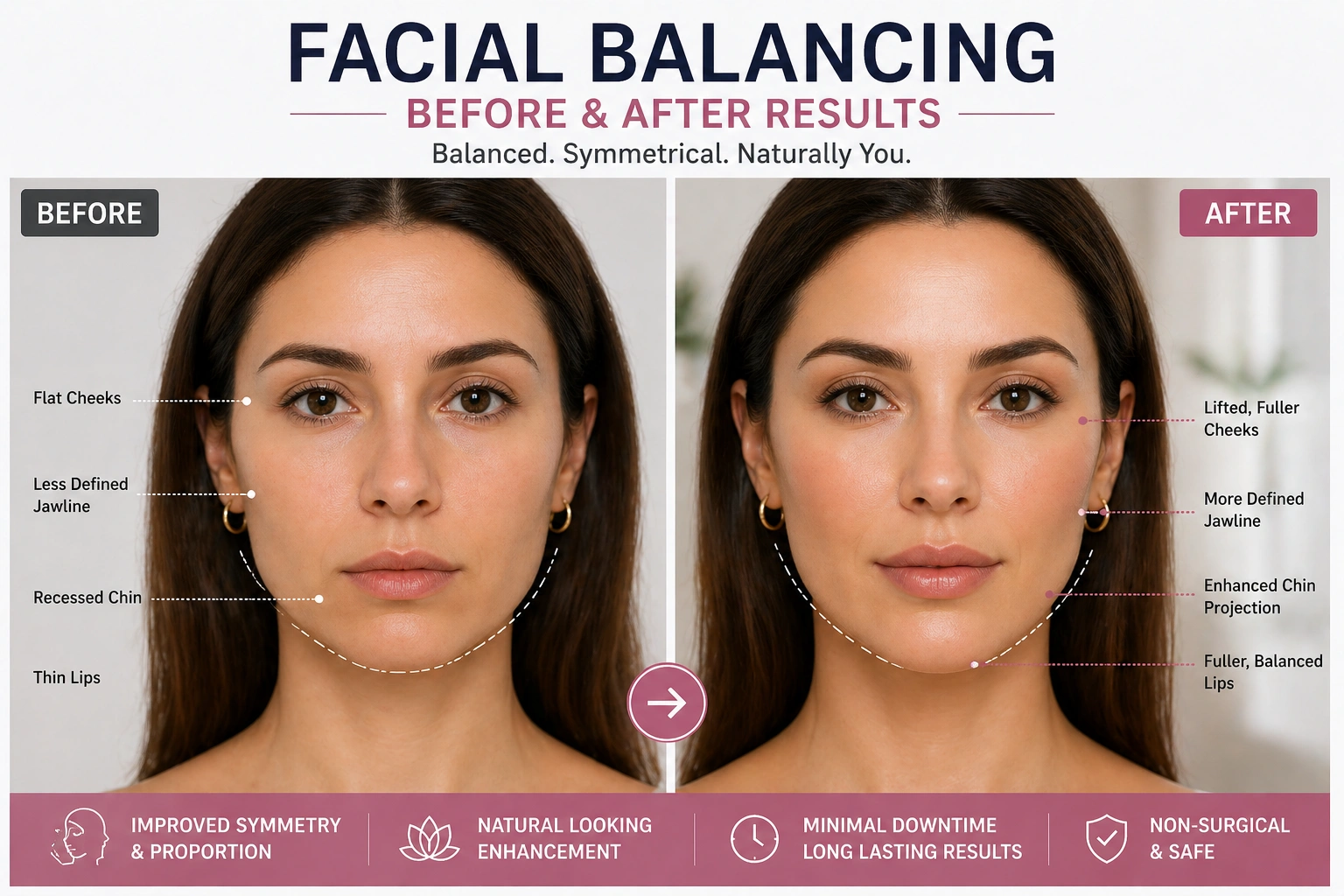
Facial balancing before and after results often look subtle at first glance. However, the real impact becomes clear when you compare proportions and symmetry side by side. Small adjustments can change how the entire face appears.
Many people expect dramatic transformations. In reality, the goal is balance, not exaggeration. Therefore, results focus on harmony, natural structure, and refined facial features rather than obvious changes.
Quick Answer: What Does Facial Balancing Before and After Look Like?
Facial balancing before and after results show improved symmetry, better proportions, and more defined features. The face looks more aligned, smoother, and naturally enhanced.
At first, the difference may seem minimal. However, when you observe the jawline, chin, cheeks, and lips together, the improvement becomes noticeable. The face appears more structured and balanced overall.
What Is Facial Balancing and How Does It Work?
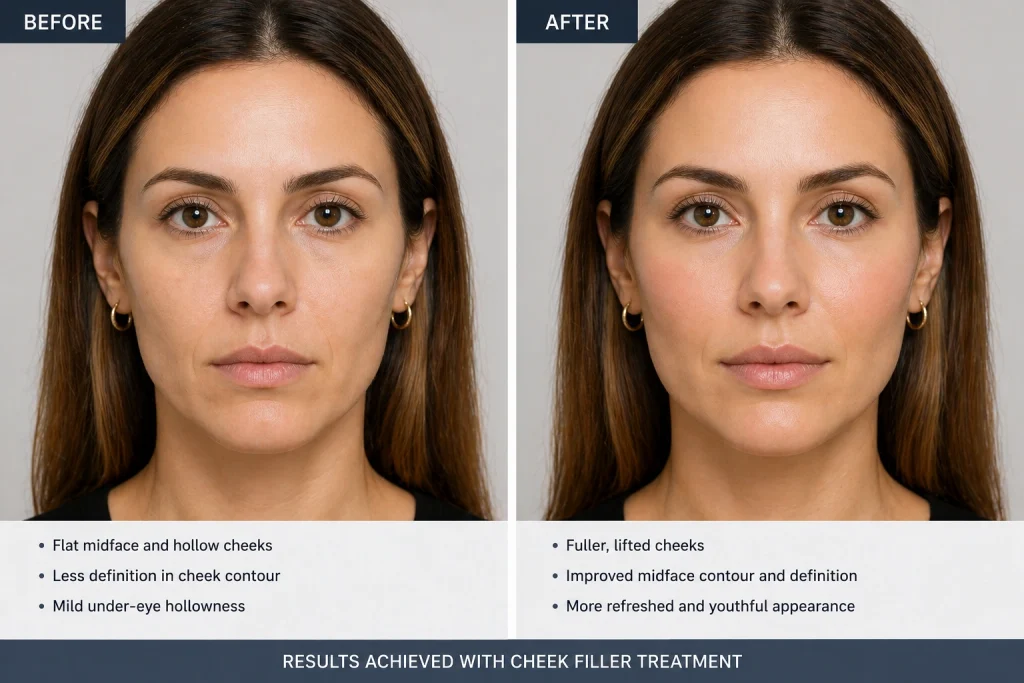
Facial balancing is a non-surgical approach that improves facial proportions using targeted enhancements. It focuses on how different features relate to each other rather than treating one area alone.
Most treatments rely on dermal fillers, especially hyaluronic acid. These fillers add volume, reshape contours, and correct asymmetry. In some cases, Botox is also used to relax muscles and refine movement.
How Dermal Fillers Improve Facial Structure
Dermal fillers restore volume where it is missing. For example, they can lift the cheeks, define the jawline, and enhance the chin. As a result, the face appears more proportionate.
At the same time, fillers smooth out lines and improve transitions between facial areas. This creates a more continuous and natural look instead of sharp or uneven contours.
Why Small Changes Create Big Visual Impact
Facial harmony depends on balance, not size. Even slight adjustments in one area can affect the entire face. For instance, improving chin projection can make the nose appear smaller.
Similarly, enhancing the jawline can make the face look slimmer. Therefore, facial balancing works by aligning features rather than dramatically changing them.
What Changes Are Visible in Before and After Results?
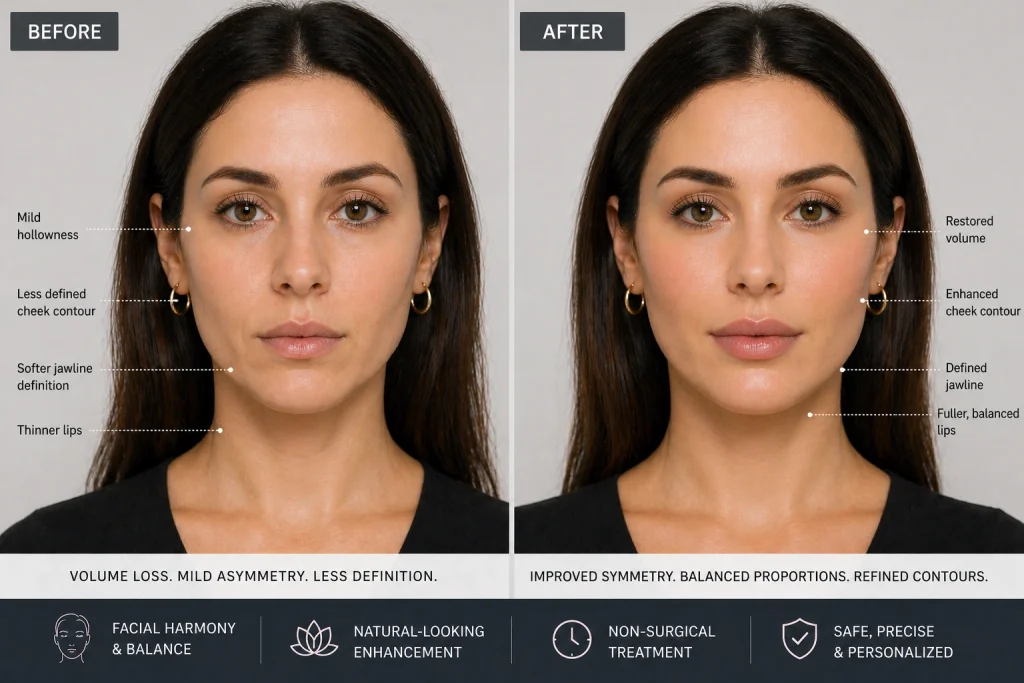
Before treatment, the face may show uneven proportions or volume loss. This can include a weak chin, flat cheeks, or lack of jawline definition. These issues often make the face look less structured.
After treatment, the improvements appear more refined than drastic. The face looks smoother, more symmetrical, and better defined. Importantly, the changes still look natural.
Before Treatment: Common Facial Concerns
Before facial balancing, many people notice uneven features or lack of definition. For example, one side of the face may appear slightly different from the other.
In addition, volume loss can make the face look tired or aged. The cheeks may appear flat, and the jawline may lose its sharpness over time.
After Treatment: Balanced and Refined Appearance
After facial balancing, the face appears more aligned. The jawline becomes sharper, the chin looks more projected, and the cheeks gain subtle volume.
As swelling settles, the final result looks natural. Most people notice that the face appears refreshed rather than altered, which is the main goal of this treatment.
Facial Balancing Before and After by Area
Facial balancing works best when each area is treated in relation to others. Instead of focusing on one feature, practitioners adjust multiple areas for better harmony.
Therefore, understanding area-specific changes helps explain how the full transformation happens.
Jawline Contouring Before and After
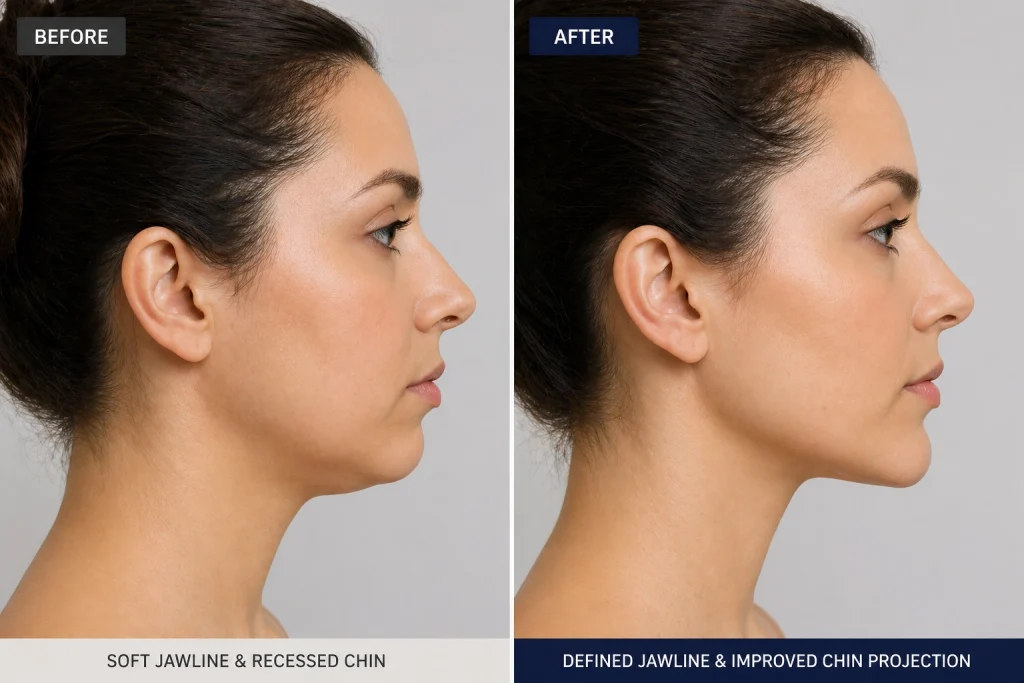
Before treatment, the jawline may appear soft or undefined. This can make the lower face look less structured or slightly sagging.
After treatment, the jawline becomes sharper and more defined. As a result, the face appears slimmer and more sculpted without looking unnatural.
Chin Enhancement Before and After
A weak chin can affect overall facial balance. Before treatment, it may make the nose look larger or the profile less aligned.
After enhancement, the chin appears more projected and proportional. This creates a stronger profile and improves overall symmetry.
Related: Thermage Before And After Results
Cheek Fillers Before and After
Flat cheeks often reduce facial dimension. Before treatment, the mid-face may look hollow or tired.
After treatment, the cheeks appear fuller and slightly lifted. This improves facial structure and adds a youthful contour.
Lip Enhancement Before and After
Before treatment, lips may appear uneven or lack volume. This can affect the balance between the upper and lower face.
After enhancement, the lips look more defined and proportionate. The goal is subtle volume that fits naturally with other features.
Nose and Profile Balance Without Surgery
Some facial imbalances come from the nose shape. While surgery is one option, fillers can adjust minor irregularities.
After treatment, the profile appears smoother and more aligned. This improves overall facial harmony without invasive procedures.
Facial Balancing Results Timeline: What to Expect Over Time
Facial balancing before and after results do not appear all at once. While some changes are visible immediately, the final outcome develops gradually over time.
This happens because fillers need time to settle and integrate into the tissue. In addition, mild swelling can temporarily affect how the results look in the first few days.
Immediately After Treatment
Right after the procedure, you will notice instant volume and improved contours. The face may already look more balanced, especially in areas like the cheeks and lips.
However, mild swelling and redness are common at this stage. Because of this, the results may look slightly fuller than expected.
After 1 to 2 Weeks
Within the first two weeks, swelling begins to reduce. As a result, the face starts to look more natural and refined.
At this stage, most people can clearly see the improvement in symmetry and structure. The features begin to settle into their final shape.
After 1 to 3 Months
Between one and three months, the final results become fully visible. The fillers integrate with the tissue, and the face looks smooth and balanced.
This is when facial balancing before and after differences are most noticeable. The improvements appear natural and well-blended.
Long-Term Results and Maintenance
Results typically last between 6 to 18 months, depending on the type of filler used. Over time, the body gradually breaks down the filler.
Therefore, maintenance treatments are needed to keep the same level of balance and definition. Regular touch-ups help preserve long-term results.
Natural vs Overdone Results: What Makes the Difference?
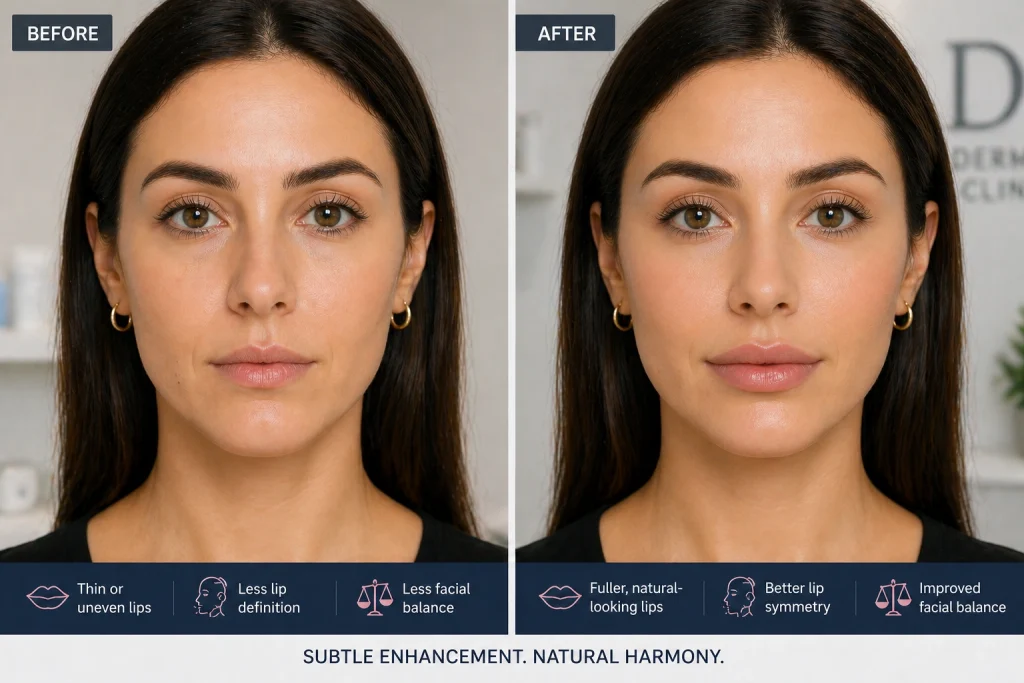
Not all facial balancing before and after results look the same. The biggest difference comes from technique, planning, and the amount of filler used.
The goal is always natural enhancement. When done correctly, results should not look obvious or exaggerated.
Natural Results: Subtle and Balanced
Natural results focus on harmony rather than volume. Each feature is enhanced just enough to improve proportions without drawing attention.
As a result, the face looks refreshed and structured. Most people notice something looks better, but they cannot always tell what changed.
Overdone Results: What to Avoid
Overfilled features can disrupt facial balance. For example, excessive lip volume or overly sharp jawlines can look unnatural.
This usually happens when too much filler is used or when only one area is treated. Therefore, a balanced approach is essential for realistic outcomes.
How the Facial Balancing Procedure Works
Facial balancing is a step-by-step process that starts with planning and ends with precise injections. Each stage plays an important role in achieving natural results.
Understanding the process helps set clear expectations before treatment.
Consultation and Facial Assessment
The process begins with a detailed consultation. The practitioner analyzes facial proportions, symmetry, and areas of volume loss.
Based on this assessment, a customized treatment plan is created. This ensures that every adjustment supports overall balance.
Injection Mapping and Treatment Plan
Before injections, specific points on the face are mapped. These points guide where fillers will be placed for the best results.
This step is important because it prevents overcorrection. It also ensures that each feature blends naturally with the rest of the face.
The Injection Process
During the procedure, small amounts of filler are injected into targeted areas. The process is usually quick and controlled.
Most sessions take less than an hour. Patients can return to normal activities shortly after treatment.
Who Is a Good Candidate for Facial Balancing?
Facial balancing is suitable for people who want subtle improvements without surgery. It works best for those with mild to moderate asymmetry or volume loss.
However, realistic expectations are important for satisfaction.
Ideal Candidates
Good candidates are individuals who want to improve facial harmony. They may notice uneven features, weak contours, or early signs of aging.
In addition, candidates should prefer natural-looking results rather than dramatic changes.
Who May Not Be Suitable
People expecting major transformation may not be ideal candidates. Facial balancing enhances features but does not completely change them.
Also, individuals with certain medical conditions should consult a professional before treatment.
Risks and Considerations You Should Know
Facial balancing is generally safe when performed by a skilled practitioner. However, like any cosmetic procedure, it carries some risks.
Being informed helps you make a better decision.
Common Side Effects
Mild swelling, redness, and bruising are common after treatment. These effects usually resolve within a few days.
In most cases, they do not interfere with daily activities.
Rare but Possible Risks
In rare cases, complications such as asymmetry or lumps may occur. These are usually linked to technique or improper placement.
Therefore, choosing an experienced practitioner is essential for safe and effective results.
Frequently Asked Questions
How long do facial balancing before and after results last?
Facial balancing before and after results usually last between 6 to 18 months. This depends on the type of filler and individual metabolism.
Regular maintenance treatments help extend the results and keep the face balanced over time.
Is facial balancing painful?
Most people experience minimal discomfort during the procedure. Numbing agents are often used to make the process more comfortable.
As a result, the treatment is generally well tolerated by most patients.
Can facial balancing look natural?
Yes, facial balancing before and after results are designed to look natural. The goal is to enhance features without making them obvious.
When done correctly, the face looks balanced rather than altered.
How soon can I see results?
You can see immediate changes after treatment. However, the final facial balancing before and after results appear after swelling subsides.
This usually takes about one to two weeks.
Is there any downtime after the procedure?
There is little to no downtime after facial balancing. Most people return to normal activities on the same day.
However, minor swelling or bruising may be present for a short period.
Can facial balancing fix asymmetry?
Facial balancing before and after results can improve mild to moderate asymmetry. Fillers help adjust proportions and align features.
However, severe asymmetry may require different treatment approaches.
How do I maintain my results?
Maintenance involves periodic touch-ups based on how your body processes fillers. A practitioner can recommend a suitable schedule.
Consistent care helps preserve the achieved balance and structure.
Final Takeaways
Facial balancing before and after results focus on harmony, not dramatic change. The improvements are subtle but effective, creating better proportions and smoother contours.
Over time, these small adjustments enhance the overall appearance. The face looks more structured, refreshed, and naturally aligned.
However, results depend heavily on technique and planning. Choosing the right practitioner and maintaining realistic expectations are key to achieving the best outcome.